
 February 17, 2026
AR Smart Glasses for Warehouse Productivity
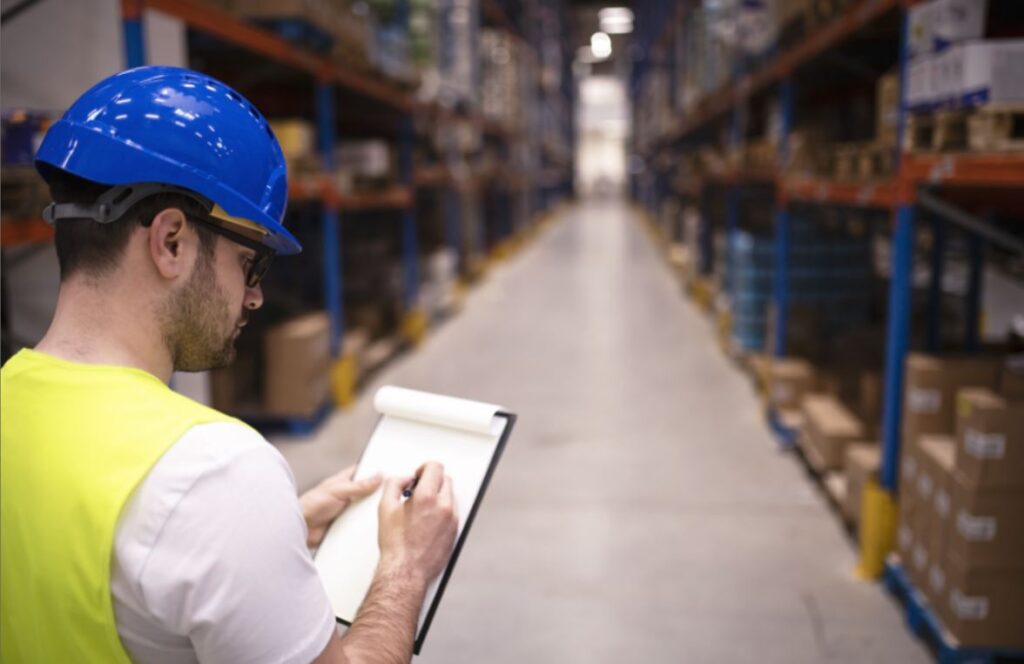
INTRODUCTIONAugmented Reality (AR) is an upcoming technology that provides enormous potential for improving operational efficiency in varied industries. In this whitepaper, the focus is on using AR Smart Glasses for improving productivity in the warehouse for operational efficiency in the supply chain and logistics.Augmented RealityAugmented Reality (AR) is adding elements to a live view using Smartphone Cameras or Smart Glasses. It won’t be replacing your vision, as is the case in Virtual Reality but it would only add to it. AR helps in enhancing the real-world environment and giving us a combination of both real and virtual worlds. So, we can safely say that it is 75% real and 25% virtual. It nicely blends the digital components into the real world by leveraging machine vision and gives a provision for real-time interaction.For example, ‘IKEA Place’ is an AR app that helps you visualize how a particular piece of furniture would look in your house, office, or any space which is under your camera focus.Supply Chain and LogisticsMost of the Artificial Intelligence & Machine Learning (AI & ML) powered solutions are based on the Sense àThink à Act paradigm. The feeds collected from the Cameras installed in the Warehouse often referred to as Computer Vision can be processed using AI and Deep Learning techniques to derive intelligent insights that can be used for confirmation and immediate action.With the advances in Artificial Intelligence and its ability to process computer vision, there is an immense potential to assist workers in automating typical supply chain tasks such as barcode recognition, label verification, damage detection for improving operational efficiency and worker productivity.WAREHOUSE OPERATIONS – CURRENT SCENARIOIn a typical warehouse, scanning the barcode is done manually using a bar code scanner where a worker would pick up each item and scan its barcode, and then place it in the box. If the worker has to pick and place thirty items in a box, he will have to pick each item, scan it using the scanner and then place it in the box, which might overall take up to 5 minutes. Although it might seem like a small task, it is a manually intensive task and consumes considerable effort and time.Pick and Pack is a high-cost operation in a warehouse. As per one of the reports published by DHL, warehouse operations such as packaging, storage, and put away consume about 20% of the expenses, and picking takes up about 60% of the warehouse operations expenses.DHL has attempted to transform its warehouse operations using Smart Glasses. The Smart Glass device provides a digital picking list, barcode scanning, and guided storage. This improved their efficiency by 25%, increased their productivity, and reduced the number of pick and pack errors.The lack of information on inventory and its location in the warehouse is also a challenge. A lot of time is consumed in locating the item, which ends up delaying the shipment.Another major challenge faced by industries this year is the current pandemic, which has disrupted business operations all over the world. There is an increase in online purchases as it is safer than going to supermarkets or malls, which has impacted the workload on logistics service providers. Organizations are finding it very difficult to manage their operations while keeping social distancing and worker safety in mind. They are looking for solutions that can bail them out from the current situation and also be helpful in the longer run.HOW AR SMART GLASSES CAN IMPROVE WAREHOUSE PRODUCTIVITY?To ensure customer satisfaction, a product must be delivered on time and in proper condition. AR can help in managing warehouse operations such as receiving goods and picking and packing more efficiently by ensuring that the products are picked and packed in less time and are in good condition.Smart Glasses can be worn by people working in the warehouse. It provides information about the items which are within their field of vision on the glasses using its Camera. It creates an interface for the users which helps them in interacting with their environment. It also provides additional features such as a microphone and speaker so that the worker can interact with their manager and take guidance from him.First, an image is captured using the camera embedded in the glasses. Machine vision collects the data by scanning the image and processes it using the Sense à Think à Act principle. Once the data is processed and digital elements are added to the current scenario, it would send it to the User’s device (Smart Glasses) to display it on the screen.In the current pandemic, smart glasses will make it easy to manage the warehouse operations using lightweight equipment that provides barcode recognition, remote support capabilities with microphone, and real-time video streaming.The following are some scenarios where AR Glasses can be effectively used:Barcode Scanning & VerificationBarcode can be easily scanned by just looking at it through the AR Glasses, instead of using a separate scanner and holding it against the barcode to scan it and will help save considerable scanning and verification time. The product being scanned can be annotated with a green or red box around the barcode to indicate whether it is the right product to be picked up which ensures that the right item is picked up.Pick and Pack OptimizationUsually, workers have their hands full in a warehouse while performing pick and pack tasks. As such, hand-free devices such as Smart Glasses are handy for performing daily activities.For example, the worker can receive information about the product to be picked up directly on the glasses and also get navigational support to quickly reach the designated pickup location. The worker can scan the product to be picked using the glasses and get instant confirmation on the display that the right product is picked. In addition, the glasses can send data to the warehouse system for reconciliation with the picklist.If the wrong products are selected or the product could not be detected at the specified location, real-time alerts can be generated for immediate action.While packing the items in a box, the barcode can be scanned easily with the help of Smart Glasses and confirmation of the right product selection indicated by annotating the barcode and/or sending a voice note. This increases the worker’s productivity and ensures optimal utilization of his time.During the loading of boxes in a truck, the Smart Glass can be used to guide to the right location for placing a particular box to ensure optimal utilization of the cargo space.Defect DetectionThe video feed or image collected by the Smart Glass can be processed using AI and image processing techniques to detect different types of defects either in the product or in packaging.Condition of GoodsThe images captured by the Smart Glass at the time of unloading, QC, picking & packing, and loading can be used as proof that the products and packages are in good condition while they are in the warehouse in case there are any complaints from customers.BENEFITS OF USING SMART GLASSESThe following are some of the key benefits that can be realized using AR Smart Glasses:Average pick up time is reduced enabling the worker to complete more work in less timeElimination of pick and pack errors leading to an increase in customer satisfactionReduction in rework and labors costsFaster warehouse operations mean fast turnaround time and less inventoryReal-time alerts to workers and managers for confirmation and prompt actionLIMITATIONSAR Smart Glasses are still expensive and there are very few vendors offering industrial-grade devices. It is important to take help from experts to ensure that the right device is selected to suit individual business needs. The current Smart Glasses available may be slow while scanning barcodes and may necessitate taking the help of an external device such as a ring scanner.CONCLUSIONAR Smart Glasses have the potential to transform and digitize specific warehouse operations and make handling of day to day tasks easier for the worker. The productivity of the worker can be increased leading to a substantial increase in the operational efficiency of warehouse operations.
Read More »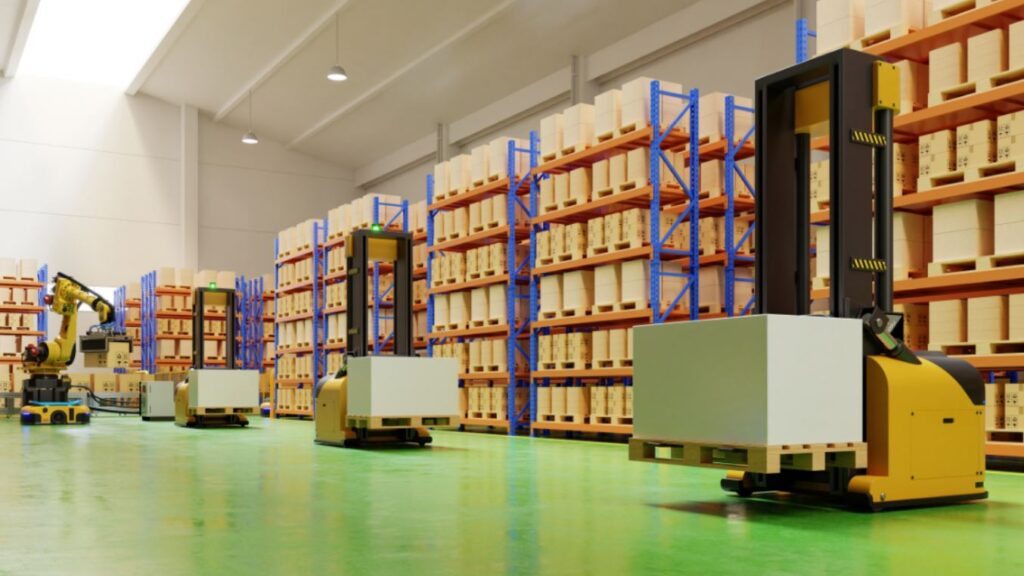 February 17, 2026
Computer Vision for Warehouse Optimization
INTRODUCTIONMost of the Artificial Intelligence & Machine Learning (AI & ML) powered solutions are based on the Sense à Think à Act paradigm. The feeds collected from the Cameras installed in the Warehouse often called Computer Vision can be processed using AI and Deep Learning techniques to derive intelligent insights that can be used for immediate action.COMPUTER VISIONThere are two terms ‘Machine Vision’ and ‘Computer Vision’ that are widely referred to while talking about innovations being introduced in business applications.Machine Vision is the ability of machines to see and act. This idea is not new and has been the stuff in science fiction for a long time, it is very much a reality now.Machine vision is an engineering-based system that uses existing technologies to mechanically ‘see’ steps along a production line. It helps manufacturers detect flaws in their products before they are packaged, ensure that goods are correctly labeled.If we think of machine vision as the body of a system, computer vision is the retina, optic nerve, brain, and central nervous system. A machine vision system uses a camera to view an image whereas computer vision is the algorithms that process and interpret the image. A machine vision system requires computer vision and does not work without a computer and specific software.Computer vision can process 3D and moving images as well and perform complex operations to detect features within an image, analyze them, and provide rich insights.The rapid increase in business solutions leveraging computer vision can be attributed to the following drivers:Advances in Artificial Intelligence (AI)Increasing computational speedDecreasing the cost of robotics & infrastructureIncreasing labor costTYPICAL CHALLENGES IN A WAREHOUSELack of visibility into Warehouse operations leading to interleaving Task delaysRework in Put Away tasks due to delays in PickupDelay in unloading/shipment due to the unavailability of dock and unloading/loading areasDelays in Pick & Pack due to non-availability of items at designated locationsThe manual effort for Carton/Package Dimensions MeasurementIncrease in Labour cost due to manual scanning, verification, and reconciliation of GoodsProducts on loading docks vulnerable to damage by forklifts and bumpy terrainHOW COMPUTER VISION AIDED BY AI & DEEP LEARNING CAN HELP?Warehouse operations typically have tasks that are interleaved. The tasks are assigned to different workers with different roles. Unless a task is completed by one worker, the next task can not be initiated which could lead to delays.The following section describes some scenarios where Computer Vision can be used.4.1 UnloadingTracking Dock Doors and Unloading areas for availability to send alerts for receiving the next Truck. It can also be used to inform the transporters real-time status of Dock Doors for reducing wait time.Auto verification of Package Labels and extraction of Label content to reconcile goods unloaded with receiptsInspection of received goods for damagesPerform preliminary checks to ensuring that Put Away locations are not occupied to avoid rework for forklift operatorsProvide visibility into available spaces for storage planningAuto capture of Box Dimensions for assessment of space needs for storage4.2 Put AwayGuide workers in quickly locating the Item and ensuring that it is stored in the specified location4.3 Pick & PackChecking availability of Order Items at Pickup location before Pick Task is assignedBarcode Recognition & Item Detection to ensure that the right item and quantity is picked and reconciling against Customer OrdersRecommendations for Carton selection & Carton space optimizationCarton Label Verification & Damage Assessment4.4 ShippingMonitor Loading area and Dock Door clearance for initiating shipment tasksReconciling shipment items against Customer OrderUsing Carton dimensions for Truck Load PlanningCONCLUSIONComputer Vision can help enhance efficiency, optimize put away and pick & pack processes, and minimize operational delays in warehouse operations.
Read More »